

Wildflower Season
Summer Arrives on the Mountain

“What a desolate place would be a world without a flower.”
-Clara Lucas Balfour
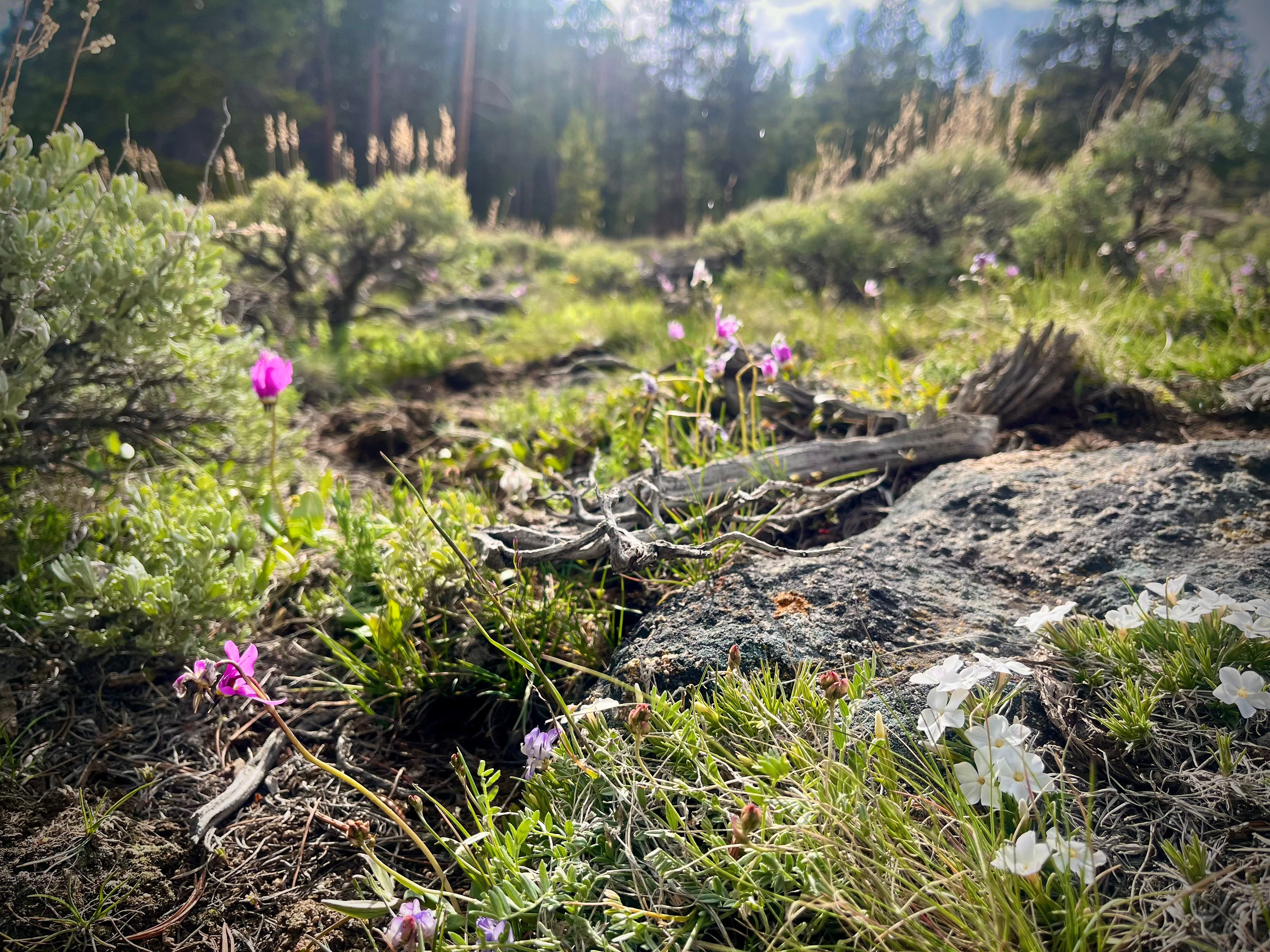
This week marked one of those moments in time that seem completely unpredictable, year to year: when the earliest spring wildflowers are joined by the second wave of blooms, up high in Wyoming’s Wind River range. That’s when you know summer is really, finally, about to arrive.
The overlap doesn’t always happen, but if it does, it may last for a few days or several weeks. It takes the perfect confluence of conditions for this to occur, and the experience reminds me of watching ocean waves coming ashore as a child. Sometimes one recedes completely before the lazy next, and others are so close together that they’re almost indistinguishable.
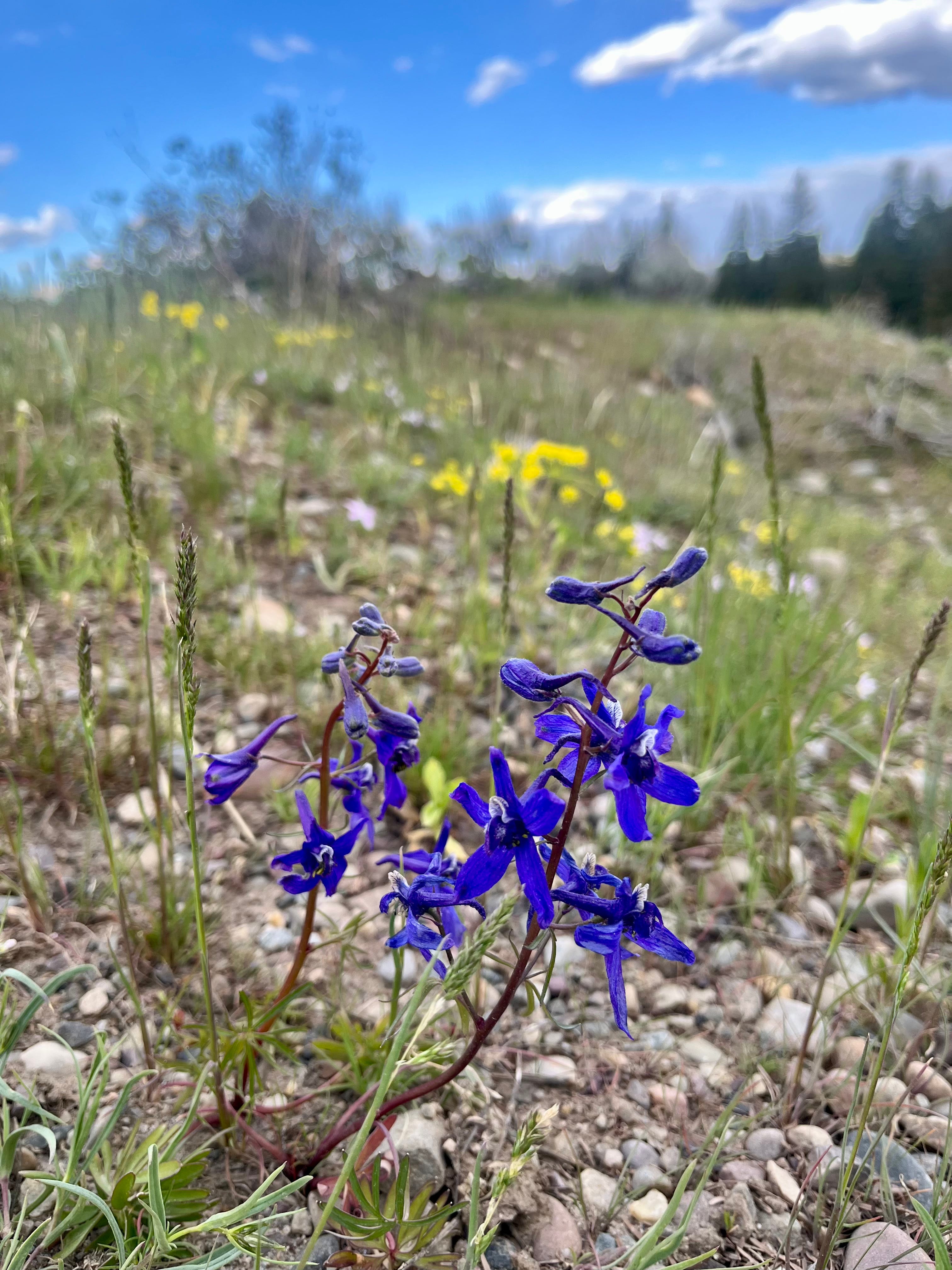
On the mountain, the first wave is the cool tones: pale yellows, white, pinks and finally blues to purple. Wild buttercups, shooting stars, bluebells, Larkspur and phlox prefer a few good days of sun while the snowpack melts to pop up. Their blossoms are susceptible, however, to late spring snows and will wither if it comes with any persistence. Whether they flower again depends on continued moisture and cool sunlight. They like a good, late start to the spring melt-out, with an easy climb to warmer and drier weather, to last the longest.
Of this phase, Larkspur always surprise me with their hardiness, but probably shouldn’t. The elegance of their orchid-like flowers, ranging from blue to black-purple, belie the toxins they carry. These little beauties are poison to pets, livestock and wildlife alike. Perhaps it’s their poison — a literal and metaphysical connection to death, a tether to the underworld — that lends them the strength to withstand the often-difficult conditions of their lives with understated command. I think of Persephone.
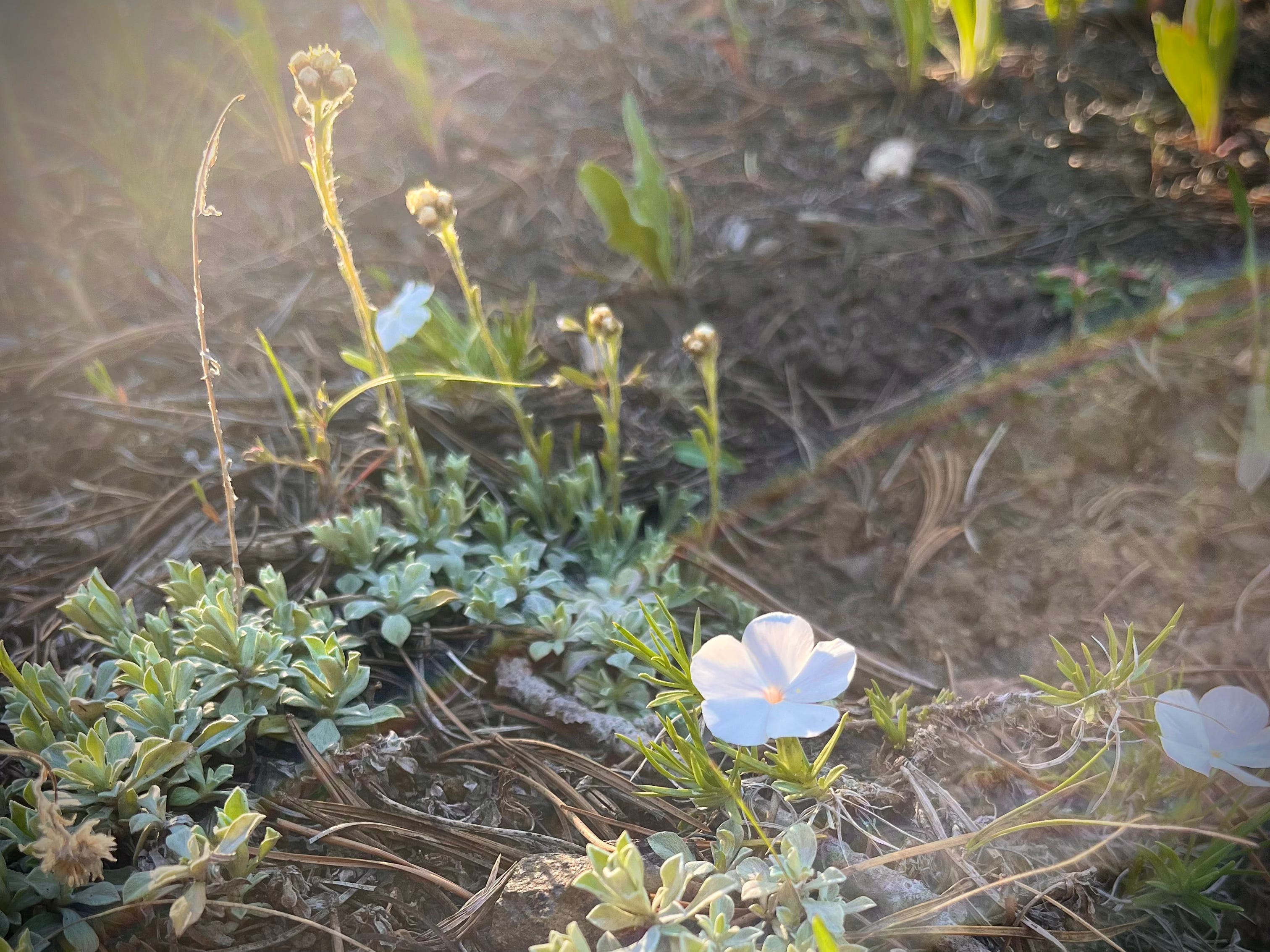
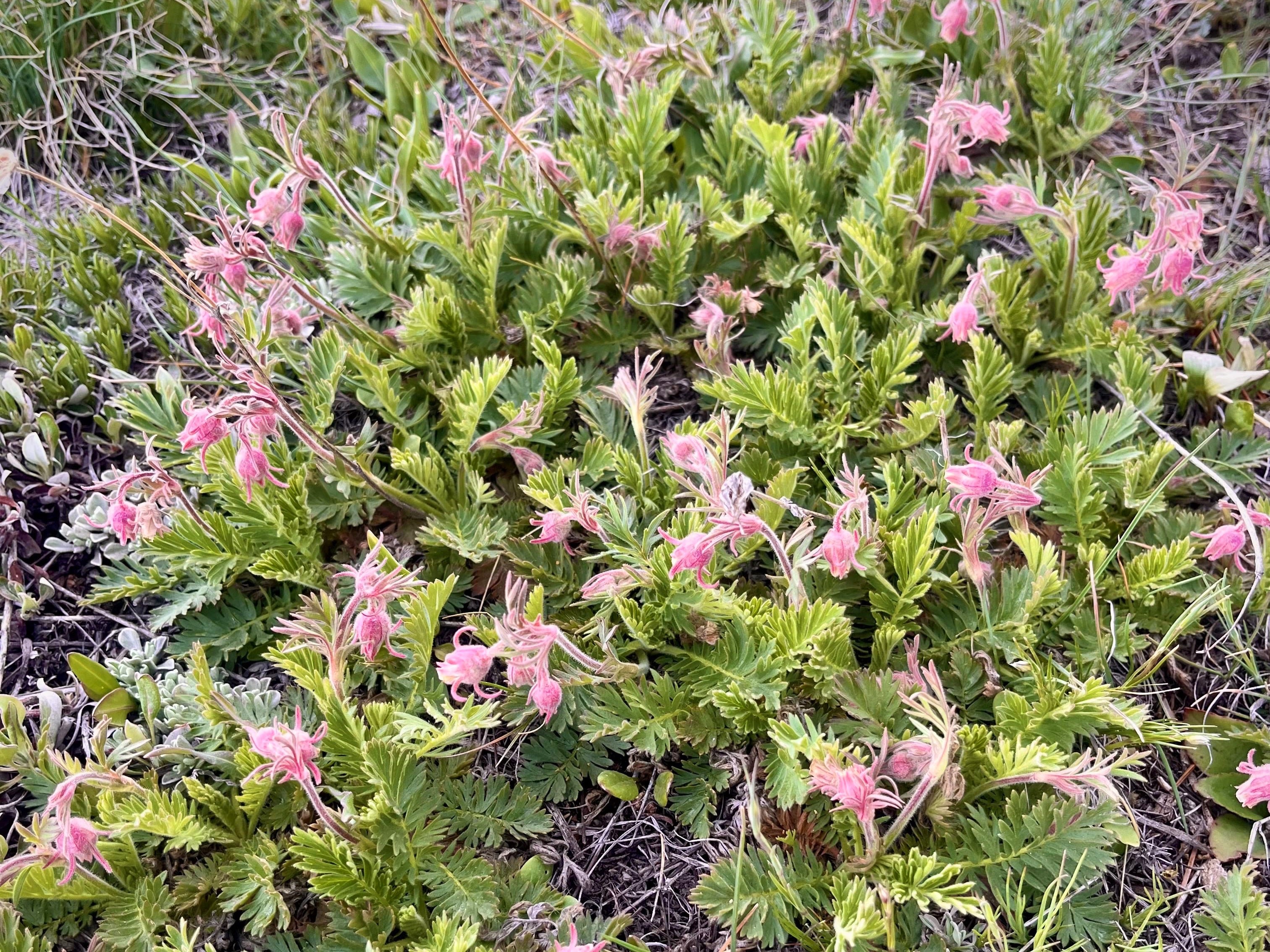
If the flowers of the first wave do last, and the gentle warm-up holds, they’re joined briefly by the early edge of the second blooming event: wild buckwheat, silky phacelia, wild strawberry, prairie smoke, and with any luck a few early lupine among the balsamroot (we have both the arrow leaf and hoary varieties up here). This season, I even spotted some early pussytoes about to bloom, in and among a dense population of moss phlox up behind the house, adding some vertical dimension to a meadow whose flowers normally hug the ground until later in summer.
This year, I wasn’t sure if this overlap would happen at all, given the unusual temperature gradients of late winter. In March, temperatures ranged from 0 degrees Farenheit to 75, and April saw a spread from 15 to 80F. This is unusual for a place that normally sees the winter snowpack several feet deep stick around until May. Several warming events erased the little snow we had into temporary gushing streams, with slim chance of soaking in to become groundwater.
Many of the first buttercups emerged during this warm window, only to be frozen back and buried again under more feet of snowfall. A few of the phlox greened up in April, similarly buried by more snow, then rising temperatures once more coaxed out the first round of shooting stars, which were subsequently hit by a blizzard or two. Nothing had quite enough time to establish, it seemed.
And then, all it took were some rainstorms every couple of days for a week, with an encouraging sun, and what seemed to be a wildflower season lost to weather fits and starts saw its moment.


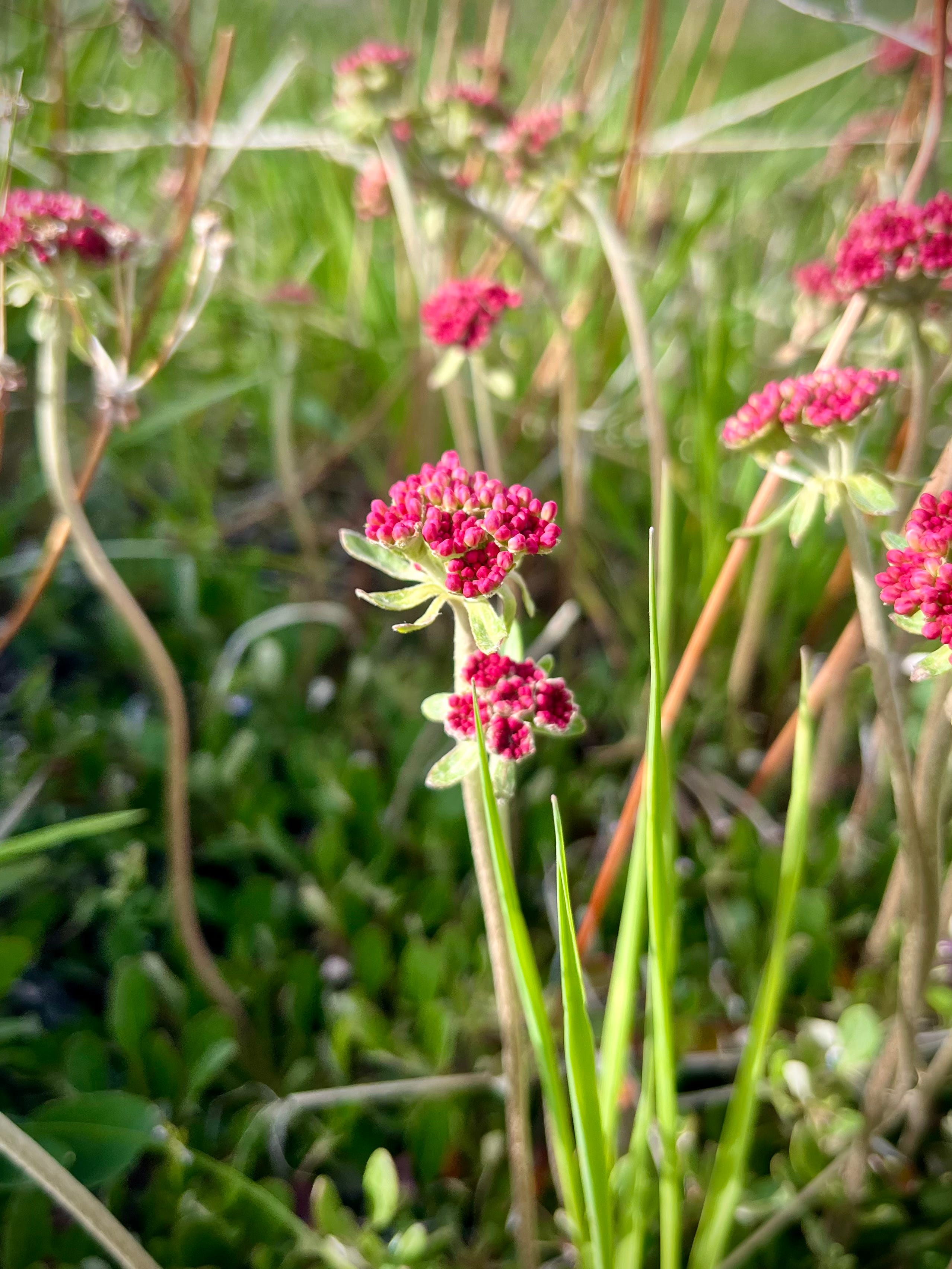
As a result, I’ve become the worst walking partner lately, stopping in all sorts of places to awkwardly crouch and photograph the “first of” everything. The first of the pink flowers, the purple, the co-mingling of the phlox and prairie smoke — two very different flowers that each charm in their own way. The firsts of the second wave of yellows, the balsamroot “sunflowers” and of course, and the thriving communities of arnica that I’ve been cheering as they expand through our aspen forest. The first of the reds — buckwheat — is always special, as the deep shade fades quickly to cool pink with green undertones as the plant fully blooms.
I don’t know exactly why marking, recording the “firsts” becomes so compulsory for me, each year. Perhaps it’s a way to learn and ultimately predict, connect the dots of weather and overall conditions, until I no longer need a forecast or almanac to tell me what phase of the season we’re in. What a romantic thought: to wake up and feel in your bones that the marsh marigolds have blossomed, this very morning.
From here on out the color palette on the landscape will only multiply. The yarrow leaves are sprouted and soft, their flowers a reliable mid-late summer companion and re-introduction of white after the phlox have gone. A few leaves of sticky geraniums are just becoming recognizable as well. I adore the delicacy of their soft pink petals. Yes, the palette will expand, and so will the vertical reach — the tallest flowers grow last, avoiding the worst of the transitional season windstorms. All will be well — provided we see enough rain.
The outlook, however, is for a dry summer. I hope it is wrong, and pray for rain. It might be selfish, but I could use a flourishing wildflower year. No season has yet come close to our second summer on the mountain, when I kept vases overflowing until September, and harvested enough of the medicinals from our land to make oils, ligaments, and salves that I have yet to use up.
If the summer runs dry, I will still of course be happy. It just means that every flower in bloom fades quicker, another lesson from the mountain that nothing is guaranteed to last. I imagine this is why so many of the native forbs have adopted a bi-annual flowering cadence, a clever strategy so each species continue to propagate despite unpredictable conditions. Seeing these flowers, now so familiar, becomes just another of the brief wonders — these delicate, hardy neighbors — to savor with every step outside.
-Aaryn
Gorgeous photos and observations, Aaryn! I am also always preoccupied with noticing and recording firsts through the seasons. I think it is a way of working the natural cycles into myself, becoming more and more part of it, so that I know around what bend to expect a sea of crocuses in late winter, and when and where the foxgloves will grow. It's a "useless" thing, which is also a way of stepping outside of productivity and profit, and just being present.